

For years, businesses relied on projectors, LCD screens, and printed signage to communicate with customers and employees. However, as commercial spaces become more digital, these traditional solutions are showing their limitations. Projectors require controlled lighting conditions, while LCD video walls often suffer from visible borders between screens.
An indoor fixed LED display offers a different approach. Instead of placing a screen inside a frame, it transforms the entire display surface into a continuous digital canvas. Built with modular LED panels, these displays can cover large areas while maintaining consistent brightness, color, and image quality.
Today, indoor fixed LED displays are no longer simply considered a replacement for traditional screens. They have become part of modern architecture, helping brands create immersive environments in shopping malls, corporate headquarters, airports, museums, and entertainment venues.
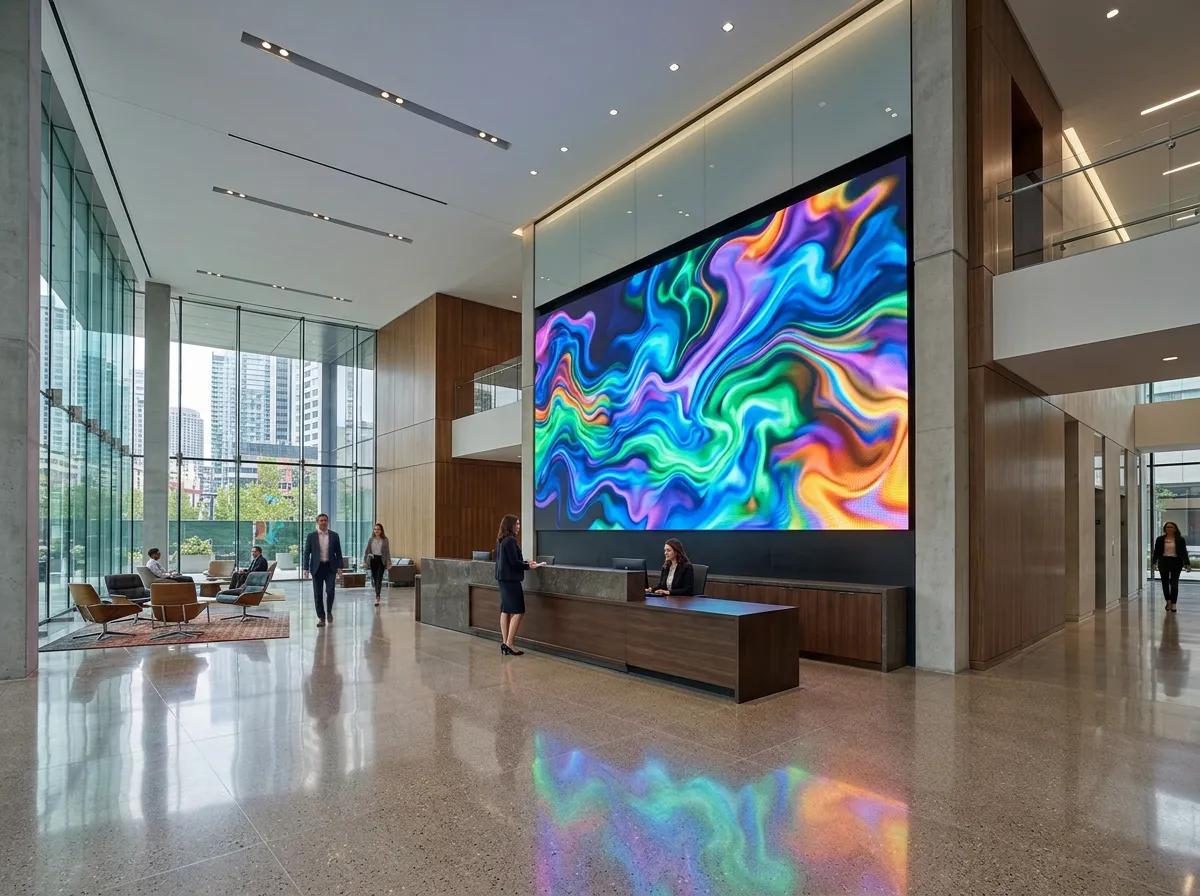
The first thing people notice about an LED display is the visual impact. LED displays use seamless modular technology to create uninterrupted images. This makes content feel more natural, especially when displaying large videos, brand visuals, or immersive content.
Brightness is another important advantage. Indoor environments are not always controlled lighting spaces. Shopping malls, exhibition halls, and transportation hubs often have strong ambient light, which can affect traditional screens. Indoor fixed LED displays typically offer brightness levels between 800 and 1500 nits, combined with high contrast ratios that can exceed 25,000:1, ensuring content remains clear and vibrant throughout the day.
Viewing experience is also improved through wider viewing angles. With advanced technologies such as COB (Chip on Board) packaging, some LED displays can achieve viewing angles of up to 160°–180°. This means audiences can enjoy consistent colors and details even when they are standing at different positions around the screen.
Different display technologies serve different purposes. However, when businesses need a large-scale, long-term visual communication solution, LED displays offer several advantages.
|
Feature |
Indoor Fixed LED Display |
LCD Video Wall |
Projector |
|
Visual Experience |
Seamless display without bezels |
Visible borders between panels |
Depends heavily on lighting conditions |
|
Brightness |
High brightness for commercial environments |
Limited panel brightness |
Image quality decreases in bright spaces |
|
Operation |
Supports 24/7 continuous use |
Suitable for standard operation |
Requires regular maintenance |
|
Installation |
Flexible sizes and creative designs |
Limited rectangular structure |
Requires projection distance |
|
Maintenance |
Front maintenance available |
More complex replacement process |
Requires lamp/filter replacement |
For B2B users, an indoor fixed LED display is more than a visual tool. It becomes part of the way a company communicates with customers, employees, and visitors.
In retail environments, dynamic digital content helps brands attract attention and create stronger shopping experiences. Instead of relying on static posters, businesses can showcase product videos, promotions, and brand stories through engaging visual content. This flexibility allows companies to respond quickly to market changes without the cost and delay of traditional advertising updates.
In corporate and public environments, LED displays improve information management. Through network-based control systems, administrators can update content remotely across multiple locations. Whether it is an emergency notification in a transportation hub or an important announcement inside a company headquarters, information can reach audiences faster and more efficiently.
Additionally, energy-efficient LED technology supports companies’ sustainability goals by reducing power consumption and helping organizations move toward greener operations.
While businesses focus on efficiency and ROI, the audience experiences the benefits through better comfort and interaction.
Advanced LED technologies such as COB packaging provide a smoother and more comfortable viewing experience. By using a more uniform light-emitting structure, COB LED displays reduce the grainy feeling sometimes associated with traditional LED screens. Some high-end products also support low blue light certification, helping reduce visual fatigue during long viewing periods.
Beyond comfort, LED displays create more immersive experiences. With high refresh rates up to 7680Hz and HDR technology, content appears smoother and more realistic, making them suitable for theaters, exhibitions, retail spaces, and entertainment venues.
In public environments such as airports and stations, LED displays also improve daily experiences by providing clear and real-time information. Passengers can quickly check updates, directions, and schedules, while shoppers can easily understand product information and promotions.
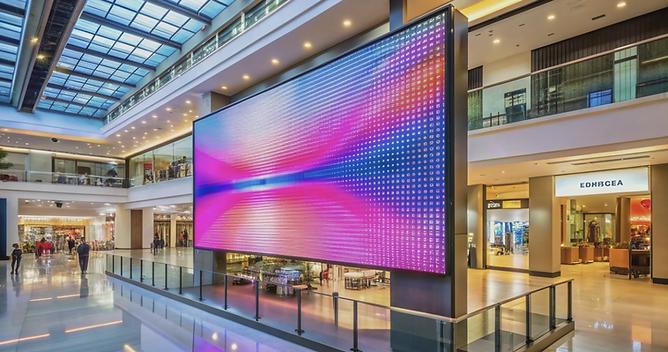
An indoor fixed LED display is a strong choice if your project requires:
|
Choose LED Display When You Need |
Why |
|
Large seamless visuals |
Creates a complete digital canvas |
|
Long operating hours |
Supports 24/7 professional applications |
|
Flexible installation |
Fits different architectural designs |
|
Easy content updates |
Enables real-time digital communication |
|
Lower long-term operating costs |
Reduces maintenance and energy expenses |
However, for small spaces or projects with very limited usage, traditional displays may still be a practical option.
For large commercial and professional applications, yes. Indoor fixed LED displays give you a great viewing experience, they're brighter, you can see them from wider angles, and they're easier to install. LCD video walls can still work well for smaller projects, but LED displays are usually better if visual impact and long-term reliability are priorities.
Yes. Professional indoor fixed LED displays are designed to keep going all the time. They use strong parts and systems that keep things at the right temperature, so they're good for places like monitoring centers, transportation facilities, and corporate control rooms.
Modern LED displays are designed to be energy efficient. Technologies like Common Cathode can really help businesses to cut power consumption and heat generation, which in the long run can mean savings on operational costs.
Yes. Thanks to modular LED technology, displays can be customized into different sizes, curved surfaces, and creative shapes to match specific architectural requirements.
Indoor fixed LED displays are changing the way businesses design digital spaces. They combine powerful visuals, flexible installation, reliable performance, and long-term efficiency into one solution.
For companies looking to improve customer experiences, strengthen brand communication, or build smarter commercial environments, an indoor fixed LED display provides a future-ready approach that goes beyond traditional screens.
Explore CLT indoor fixed LED display solutions and discover how digital technology can transform your space.
2026.07.31
2026.07.28
2026.07.24
2026.07.22
2026.07.15
 中文
中文 English