

For businesses looking for a smarter way to bring large-format visuals into meeting rooms, classrooms, and commercial spaces, one question is becoming increasingly common: what makes an LED display truly “all-in-one”?
An all-in-one LED display is not simply a larger screen with a different design. It represents a shift toward simpler installation, easier operation, and a more integrated user experience. By combining the LED modules, control system, video processing, audio, and smart features into a single solution, AIO LED displays remove many of the complexities traditionally associated with professional LED systems.
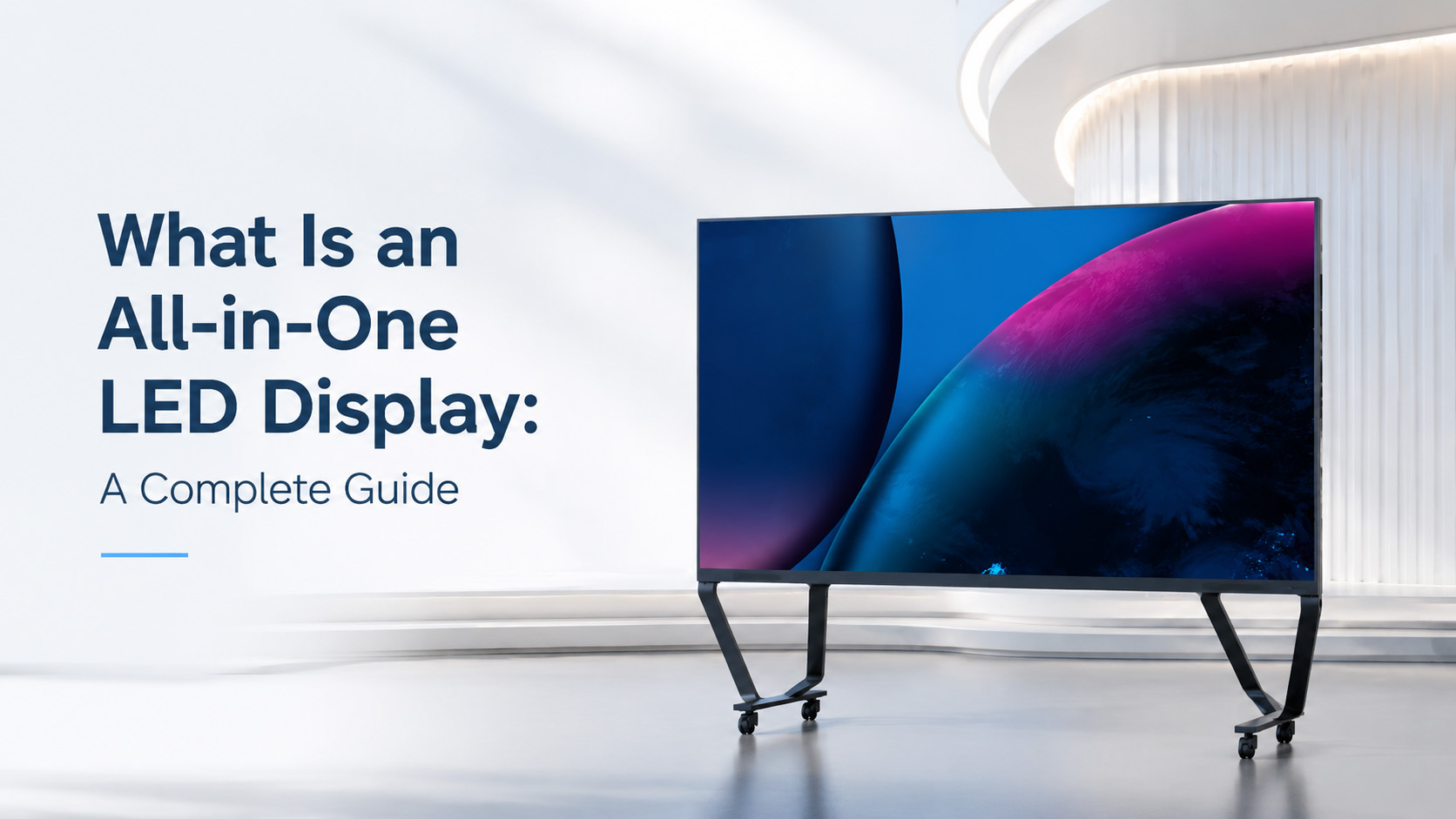
An all-in-one LED display, also known as an AIO LED display, is a display solution that integrates multiple hardware and software components into a single cabinet.
Traditional LED displays are usually built with separate modules, including LED cabinets, control systems, video processors, power supplies, and audio equipment. While this design offers flexibility for large customized projects, it often requires professional installation and complex system configuration.
An all-in-one LED display changes this approach by bringing these components together. The LED screen, embedded image processor, power management system, and audio system are already integrated inside the display. Users can simply connect the power supply and start using the screen, just like operating a large smart TV.
The purpose of AIO technology is simple: to make professional LED displays easier to install, easier to operate, and more suitable for everyday business environments.
An AIO LED display combines the display system, embedded video processor (SoC), audio system, and power management into one complete solution. This eliminates the need for external controllers, sending boxes, and complicated cable connections.
Many all-in-one LED displays also come with built-in operating systems such as Android, LG webOS, or Samsung Tizen. These smart platforms allow users to run applications directly on the display, including video conferencing software, wireless screen sharing tools, and content management systems.
This design makes the whole system cleaner while reducing how complicated it is to install.
Unlike traditional LED systems that may require multiple devices and professional technicians, AIO LED displays are designed for quick setup. Many models use quick-build technology, allowing large displays of 130 inches or above to be installed within only a few hours.
In most cases, users only need to connect standard AC power cables and select the content source to start operation. This plug-and-play experience makes all-in-one LED displays especially suitable for meeting rooms, classrooms, and commercial spaces where fast deployment is important.
Although an all-in-one LED display focuses on simplicity, it does not compromise performance. AIO LED displays typically offer high brightness, strong contrast, and high refresh rates to ensure clear images even in bright indoor environments. Many professional models provide brightness levels between 500–1000 nits and refresh rates of 3840Hz or higher, making them suitable for presentations, videos, and professional content playback.
In addition, built-in high-quality speakers eliminate the need for separate audio equipment. This creates a cleaner installation while providing a complete audio-visual experience.
Many all-in-one LED displays include smart interactive features to support collaboration. With wireless screen sharing, users can easily mirror content from laptops, tablets, and smartphones to the large screen. Some models also support infrared touch technology with up to 20 touch points, allowing the display to work as a digital whiteboard. Users can write, annotate, draw, and interact directly on the screen, making it ideal for meetings, teaching, and collaborative discussions.
Maintenance is another important advantage of all-in-one LED displays. Many AIO LED solutions support front maintenance design. If an LED module needs replacement, technicians can remove and replace the damaged module directly from the front using magnetic tools, without removing the entire display or accessing complicated rear wiring. This helps reduce maintenance time and improves long-term reliability.
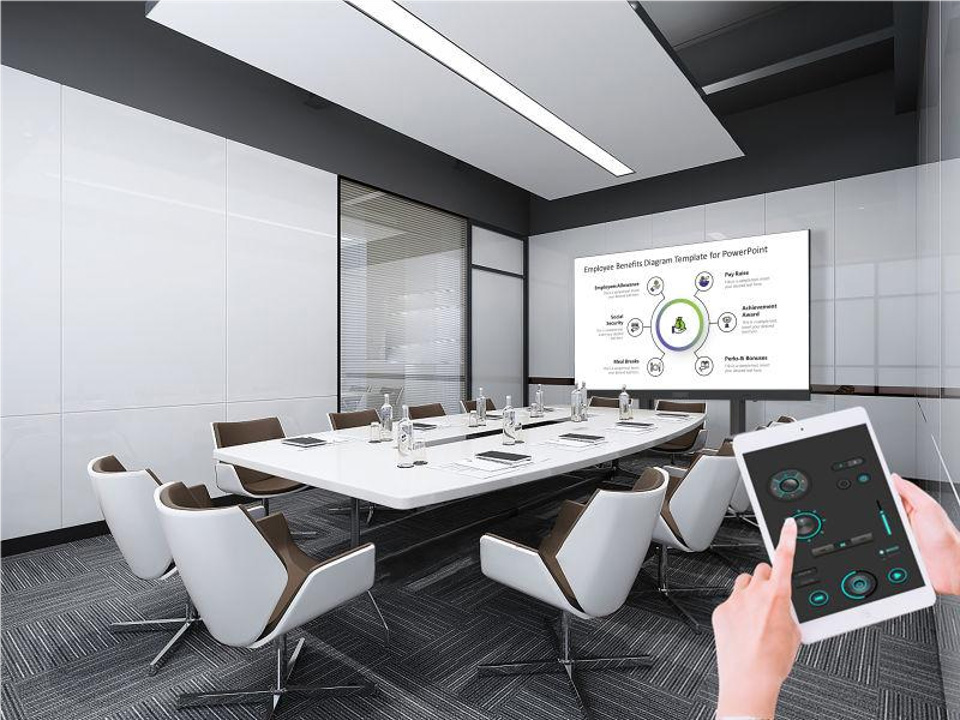
Thanks to the integrated design and simple operation, all-in-one LED displays are widely used across different industries.
In corporate meeting rooms, they provide large, seamless screens for video conferences, presentations, and collaboration.
In education environments, they replace traditional projection systems with brighter images and interactive learning experiences.
In command centers, they deliver clear visual information with reliable performance.
In retail stores, showrooms, and luxury spaces, they create immersive digital experiences with premium visual impact.
With standardized sizes ranging from 108-inch, 130-inch, 135-inch, 136-inch, 162-inch, 163-inch, to 216-inch and so on, AIO LED displays can fit different room sizes and application requirements.
A regular LED display typically requires additional controllers, processors, and other equipment. An all-in-one LED display puts all these components into the screen, which makes installation and operation much simpler.
Yes. Many AIO LED displays support built-in smart systems, wireless screen sharing, and compatibility with video conferencing applications.
Yes. Designed for quick deployment, many AIO LED displays can be installed within hours and require fewer external connections compared with traditional LED systems.
An all-in-one LED display is defined by how well it balances visual performance, system integration, installation simplicity, and everyday usability. AIO LED displays make professional large-format visuals easier to deploy and manage across different environments. Whether it is a modern meeting room, interactive classroom, retail space, or command center, choosing the right all-in-one LED display means finding a solution that matches your space, viewing needs, and long-term operation goals. With the right combination of display quality, smart functionality, and easy maintenance, an AIO LED display provides a more efficient way to create seamless visual experiences.
2026.07.31
2026.07.28
2026.07.24
2026.07.22
2026.07.15
 中文
中文 English