
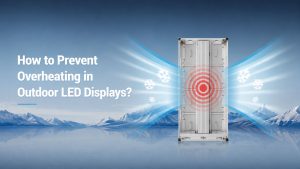
An outdoor LED display is basically a “giant little heater” working under the sun. Unlike indoor screens, outdoor LED displays often operate for long hours in direct sunlight, high temperatures, and changing weather conditions. Inside the cabinet, thousands of LED chips, power supplies, and control components continuously consume electricity. A part of that electrical energy becomes light, but the rest turns into heat.
When heat builds up faster than it can escape, several problems may appear:
- LED brightness decreases
- Color consistency becomes unstable
- Electronic components age faster
- Display lifespan becomes shorter
- Unexpected failures may occur
That is why thermal management is one of the most important factors when choosing an outdoor LED display.
How Do Outdoor LED Displays Reduce Overheating?
1. Common Cathode Technology: Providing Only the Power LEDs Need
Traditional LED displays using common anode technology work like a restaurant serving the same oversized meal to everyone. Whether the red, green, or blue LED chips need the same amount of energy or not, they receive a fixed power supply. The result? Extra energy is wasted and converted into unnecessary heat.
Common cathode technology works differently. It acts more like a smart nutrition system, delivering the right amount of power to each LED color according to its actual needs. By reducing unnecessary power consumption, common cathode technology can lower energy waste by around 30%–45%. Less wasted electricity means less heat generated inside the display, helping the screen maintain stable performance even during hot outdoor conditions.
2. Die-Casting Aluminum Cabinet: A Highway for Heat
A poorly designed cabinet can trap heat inside, similar to leaving a car parked under the sun with the windows closed. Even if the internal components are working normally, the temperature keeps rising.
Die-casting aluminum cabinets solve this problem by using aluminum’s excellent thermal conductivity. Instead of allowing heat to stay around internal components, aluminum quickly transfers heat from inside the cabinet to the surface, where it can be released into the surrounding air.
Compared with traditional steel sheet cabinets, aluminum cabinets provide a lighter structure and more efficient heat transfer, making them ideal for outdoor environments where temperature control is critical.
3. Vertical Heat Sinks: Using the “Chimney Effect”
High-performance outdoor LED displays often include vertical heat sink designs on the back of the cabinet. These grooves are not only for appearance—they help create natural airflow through a principle called the “chimney effect.” Warm air naturally rises. When heat builds up inside the cabinet, it moves upward through the vertical channels, while cooler air enters from below. This creates continuous airflow without relying completely on fans. This passive cooling method reduces energy consumption and improves reliability because fewer mechanical parts are required.
4. Smart Cooling Systems: Automatic Temperature Control
Natural cooling works well in many situations, but extreme environments require additional support. For large outdoor LED displays, desert climates, or locations where temperatures can exceed 40°C, active cooling systems may be necessary.
These systems work like an air conditioner for the LED display. Temperature sensors continuously monitor internal conditions. When the cabinet becomes too hot, the system automatically activates industrial fans or air conditioning units.
Advanced cooling systems can maintain internal temperatures within a stable range, helping protect sensitive electronic components from overheating and extending product lifespan.
5. Intelligent Software Control: Reducing Heat Before Problems Happen
Modern outdoor LED displays are not just hardware—they also have a smart “brain.” Through sensors and control software, the display can automatically adjust brightness according to environmental conditions.
During bright daylight, the screen increases brightness to maintain visibility. At night, it reduces brightness because high brightness is unnecessary. Lower brightness means lower power consumption and less heat generation. If internal temperatures become unusually high, the system can automatically reduce brightness to control heat. In extreme situations, when temperatures reach unsafe levels, the display can activate protection modes or shut down temporarily to prevent permanent damage.
How to Maintain an Outdoor LED Display and Prevent Overheating?
Even the best thermal design needs proper maintenance. A few simple habits can significantly improve cooling performance:
1. Keep enough installation space
When installing an outdoor LED display against a wall, leave around 10–15 cm of space behind the cabinet. This allows air circulation and prevents heat from becoming trapped.
2. Clean ventilation areas regularly
Dust on ventilation holes works like a thick blanket covering the display. Regular cleaning every few months helps maintain airflow and improves cooling efficiency.
3. Monitor temperature performance
For large or critical installations, regularly checking cabinet temperature can help identify potential cooling problems before they become failures.
FAQ: Outdoor LED Display Overheating
1. Can outdoor LED displays work in direct sunlight?
Yes. Outdoor LED displays are designed for direct sunlight operation. They use high brightness LEDs, weather-resistant cabinets, and thermal management systems to maintain performance in outdoor environments.
2. What temperature can an outdoor LED display withstand?
Most outdoor LED displays are designed to operate in a wide temperature range, commonly around -20°C to 50°C. However, performance depends on cabinet design, cooling systems, and installation conditions.
3. Does higher brightness make an LED display hotter?
Yes. Higher brightness usually requires more power, which creates more heat. Smart brightness adjustment helps balance visibility and temperature control.
4. Why is aluminum better than steel for LED display cabinets?
Aluminum has better thermal conductivity than steel, meaning it can transfer heat away from internal components faster. This helps reduce heat buildup and improves reliability.
5. Do outdoor LED displays need fans?
Not always. Some displays use passive cooling designs such as aluminum cabinets and heat sinks. Large screens or extremely hot environments may require active cooling systems.
6. How can I improve the cooling of my existing LED display?
Make sure the display has enough ventilation space, clean dust from cooling areas regularly, and check whether brightness settings and cooling systems are properly configured.
Conclusion: Better Heat Management Means Longer LED Display Life
Preventing overheating in outdoor LED displays is not about relying on one single technology. It is a complete thermal management system that starts with efficient power usage and continues through cabinet design, airflow optimization, smart cooling, and intelligent control.
When choosing an outdoor LED display, look beyond brightness and resolution. A display with better heat management will deliver more stable performance, lower maintenance costs, and a longer service life in demanding outdoor environments.
Explore CLT outdoor LED display solutions to discover how advanced thermal design helps displays perform reliably in challenging conditions.