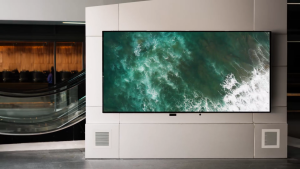
With the advancement of large-format LED display technology and end users’ pursuit of ultra-slim, ultra-high-definition and aesthetically pleasing displays, LED displays have evolved from complicated, engineering-heavy products toward high integration and all-in-one design, which has gradually become an industry trend.
The LED display terminal market has long been uneven in quality, flooded with numerous non-compliant modules. Exposed power supplies, arbitrary wiring and flying wires frequently cause short circuits, cable aging and even fire hazards. Safety and compliance remain major severe challenges for the entire LED display industry.
Identifying this market pain point sharply, CLT-LED adheres to the design philosophy of “Commercial Display Integration Concept, Premium Quality from a Leading Manufacturer”. From 2023 to 2024, it successively launched multiple highly integrated all-in-one board LED cabinets, namely the LX-lite and LMA2 series. Both series adopt an integrated design of power supply, receiving card and adapter board to ensure safety and compliance. Equipped with hard connection technology, they reduce cable constraints, save space as well as installation and maintenance costs to cut expenses and boost efficiency. Meanwhile, actively responding to national policies on safety compliance, energy conservation and environmental protection, CLT-LED has accelerated the popularization and wide application of new technologies, and pioneered P1.2 cabinets in the industry.
Generally speaking, there are two main connection types for LED displays: soft connection and hard connection. Soft connection means that LED modules or cabinets are linked via external signal cables and power cables. This method requires wiring one by one during installation, which is quite cumbersome. Hard connection integrates all connecting circuits inside cabinets or modules to minimize external cabling for a neat and clean setup.
As an innovative connection method for LED displays, LED hard connection technology delivers many remarkable benefits, with its key advantages listed below:
- Simplified Installation Process Thanks to the hard connection design of LED cabinets, technicians no longer need to connect cables one by one. Installers only need to butt the interfaces of modules or cabinets to complete splicing, which greatly streamlines the installation workflow and cuts installation time.
- Improved Maintenance Efficiency Since the circuits are integrated within hard-connection LED cabinets, faults can be located and repaired more rapidly. This design reduces after-sales issues triggered by cable failures and lowers the difficulty and cost of maintenance.
- Enhanced Aesthetics Traditional LED displays require external cabling, leaving a mass of messy wires on the rear side after installation and spoiling the overall appearance. In contrast, hard-connection LED displays feature fully internalized circuits, resulting in tidy and orderly rear panels and a notable aesthetic upgrade.
- Higher Space Utilization The all-in-one hard-connection LED cabinets boast high integration and flexible layout to save space. At identical sizes, they are over 22.22% lighter and 29.09% thinner than traditional LED cabinets.
- Better Screen Flatness Internal wiring of hard-connection LED cabinets ensures a flatter panel. Consistent visual quality is preserved from front and side viewing anglesHigher Durability Hard connection cuts cable wear and tear, reduces failure rates and boosts the reliability of LED screens.Full Certifications & Quality Guarantee Hard-connection LED cabinets adopt innovative designs and hold various certifications (3C, CNAS, CE etc.) to guarantee product quality for customers.To conclude, hard connection technology enables LED displays with simple installation, easy maintenance, good appearance and robustness. It is an important trend in LED display development. Driven by smart and connected technologies, hard-connection LED displays will combine with IoT and big data for wider adoption.